SJIWFF: The Snake
St. John’s International Women’s Film Festival | Screening Oct. 24, 7pm at the Majestic
Maggie Burton
This year’s St. John’s International Women’s Film Festival begins on October 20th, with five days of films screened in downtown St. John’s Majestic Theatre, with virtual screenings available as well to folks across Newfoundland and Labrador.
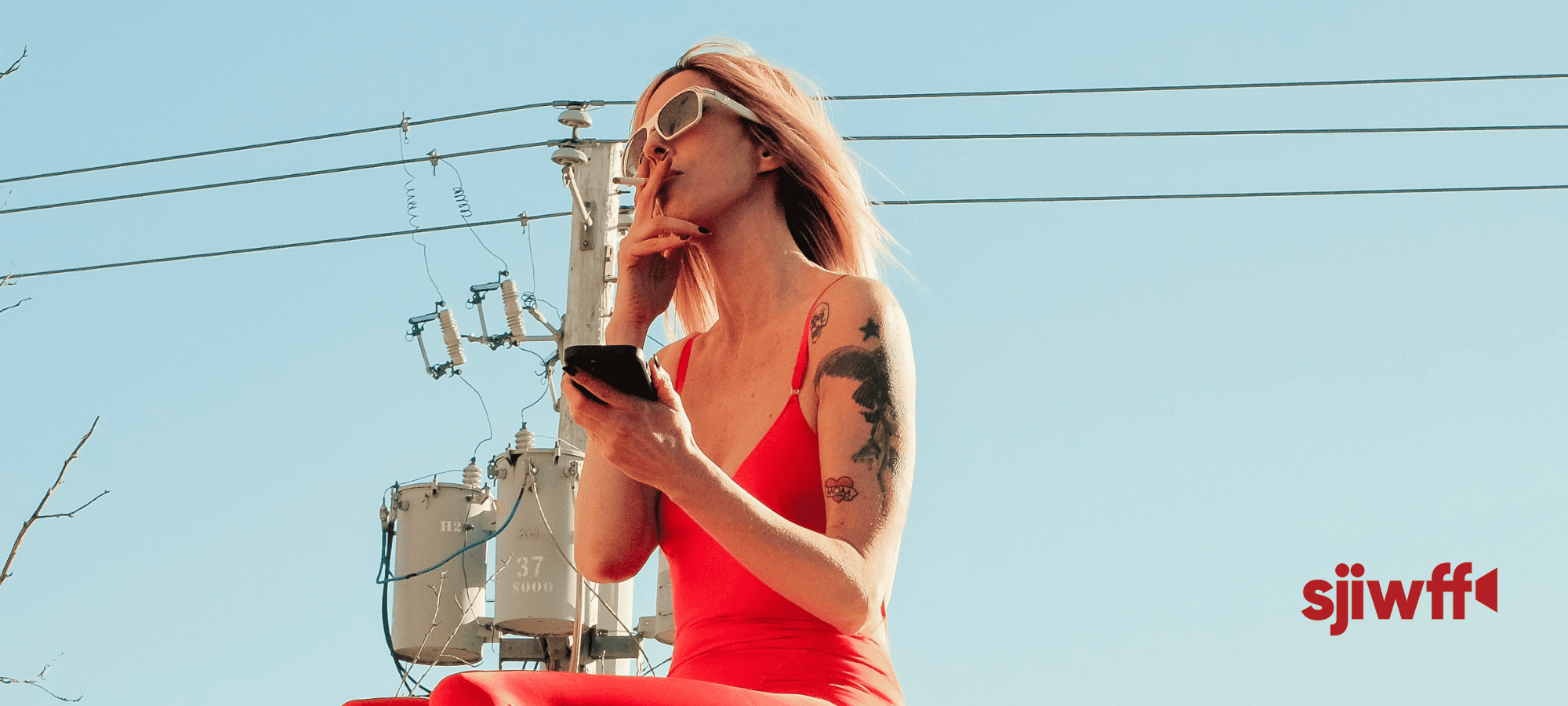
The Snake, directed by Jenna MacMillan, screening Saturday Oct. 24 in the SJIWFF
Jenna MacMillan is the director of The Snake, starring and written by Susan Kent. While it may be sold out for the October 24th showing at the Majestic, audiences across North America should keep an eye out for future opportunities to see this fantastic film. Jamie (Susan Kent) is a party-loving free spirit in her forties. Kent has described Jamie as “ungovernable” in interviews about the film, which begs the question: who is trying to govern her? Her mother, for one. Anne (Robin Duke) is her poisonous, self-victimizing mother who not only has nothing good to say to Jamie, she is actively cruel.
Early one morning, Jamie gets dropped off by the police and her mother refuses to let her into the house she’s been staying in, which once belonged to her grandmother. “Your free ride is over Jamie, go back to Davey’s van.” Anne describes it as an intervention, wanting Jamie to grow up. Jamie accuses her of getting kicked out of her duplex for sleeping with the neighbour, and that Anne is manipulating her to get the house. “Eat shit, toilet-face,” Jamie says, walking away from her home with her belongings that her mother threw in garbage bags.
Within the space of a couple of minutes, an entire mother-daughter relationship is laid bare. Anyone who has ever questioned their own sanity after being in the presence of a woman like Anne will find some healing in this film.
MacMillan packs a lot into every short scene in this film. She also uses repetition to reinforce brief moments of insight into her characters, such as having Jamie take out her breasts whenever she’s by a mirror to check to see if she’s still got it. Anne repeats herself, too, but it exposes her manipulation of Jamie. “Is he a good shoulder to cry on, is he? In that squalid van on Forest Street? Is he a better shoulder to cry on, that low-life, than your own mother?” asks Anne, mid-way through the film, as if she hadn’t told her to go live with him in the first place. But as the film explores, Jamie, like her mother, prefers to have the last word, even if it gets her in trouble.
Another domain in her life in which she is ungovernable is within her romantic relationships. She wants to be cared for, and asks for what she wants, but her boyfriend Davey is too immature. “I’m wondering if you value me,” Jamie says to him. He ducks the question. “Wolves don’t go live with their girlfriends. Wolves run. I run.” They ostensibly break up, and Jamie goes to her friend’s house for help. Chaos ensues, and circumstances worsen for Jamie as she tornadoes her way through this period of her life. Jamie doesn’t appear to consider the consequences of her actions, or maybe she does, and has decided not to care. “I’m ovulating” she jokes at one point as an explanation.
Who amongst us ovulators has not done something reckless, heck, perhaps a whole chain of reckless events in the name of desire, boredom, or self-actualization? Some of us are just more unlucky than others and end up in jail before we find out how far we can go. As Jamie knows, and as I expect Susan Kent knows considering she wrote this fabulous film, a woman’s independence and autonomy are often hard-won. But if you keep fighting, maybe someday you’ll come out on top. “You are ungovernable,” someone says during Jamie’s day in court. Yeah, well maybe she has had to be. Maybe that’s a compliment. And maybe those of us who allow ourselves to be governed should all mess up a little more, too.
Maggie Burton is a writer and musician from Brigus, Newfoundland and Labrador. She is the author of one book of poetry, Chores (Breakwater Books, 2023), and one book of short fiction, A Temporary Grace (Breakwater Books, 2026). In 2024, the Griffin Poetry Prize awarded Chores the Canadian First Book Prize.