
Daze Jefferies weaves words like waves
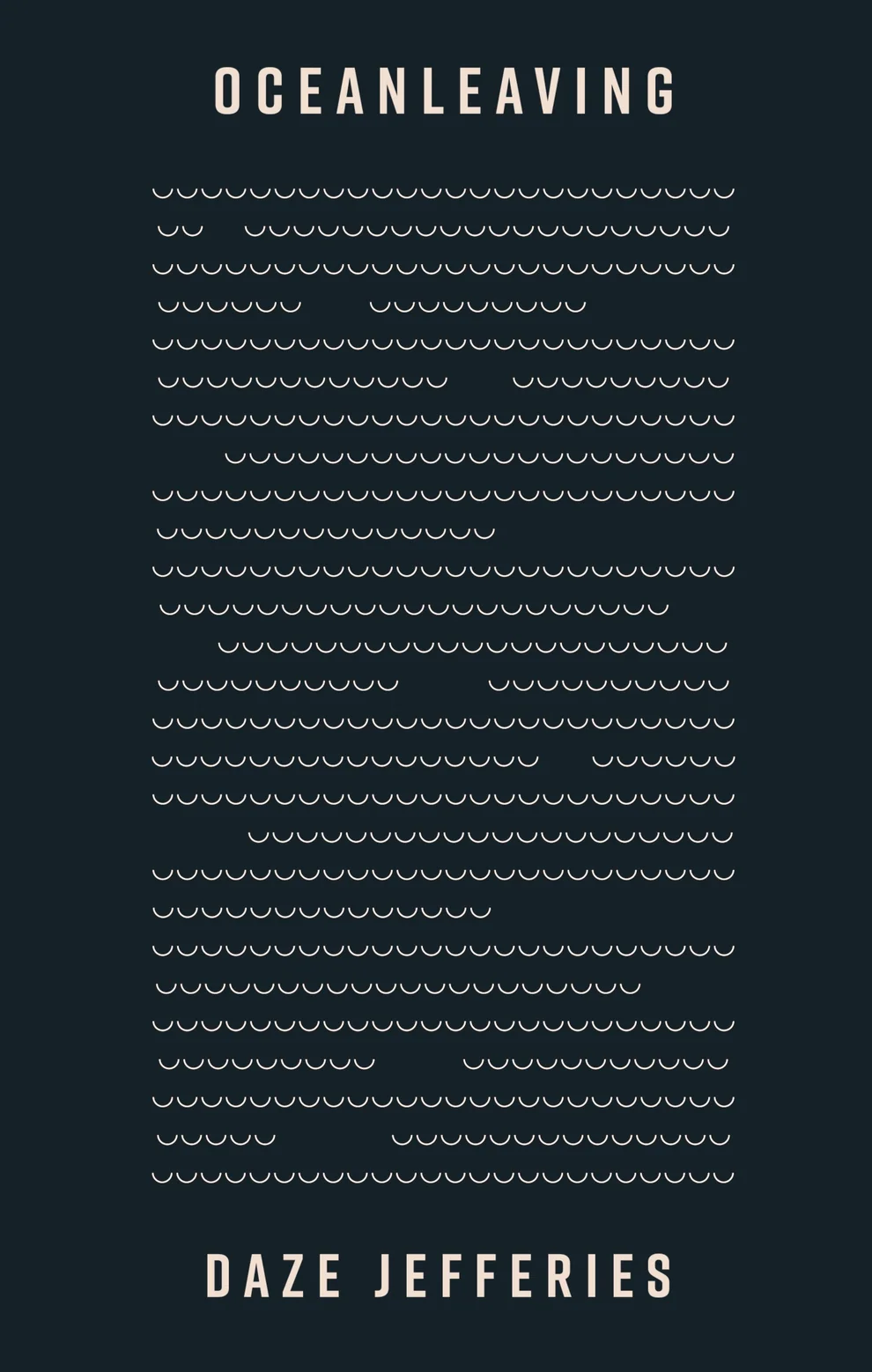
Oceanleaving, Daze Jefferies | Gordon Hill Press & The Porcupine’s Quill | $20
Rhea Rollmann
Daze Jefferies’ collection Oceanleaving—described as a “counter-history of rural trans and sex worker resistance”—is important in many ways, and I’ll discuss two of them. First, as tribute honouring the queer, genderqueer, rural sex workers whose lives define this place with unremitting authenticity. Despite their ubiquitous presence in this place, in the NL literary canon they remain consigned to the mists of history, a presence all-too-often hinted and whispered at in hushed, mumbled tones (it is a recurring tragedy of this place that we fear singing the praises of those who merit it the most, while fawning over the least deserving among us). Yet in these pages they emerge again and again, discreet tangles of identity and resilience drifting along the landwash, accumulating form and presence with each line of verse. Long relegated to the margins alongside all those other watery wonders gathered by waves (mermaid, siren, kraken), here they assert their presence, a presence old as water itself, and etched just as firmly into the stony heart of this place.
“among the precious netting, you so quietly inherit / her archive of intimates, lissome and undimmed / the very last time you saw her in a nightdress, lambent, resting on a tapestry loveseat, there were transitory sempstresses alight. when you fell silent, she reached for an afterglow. this slow rhythm, a wool yolk, a wavemark / fleece, cord, silk and lace slips / resurface as archipelago…”
“…her tenderable body, her merciful overflow / her roseate alcove and breath acquiesced…”
The denizens of these poems emerge as ghosts in the fog, shrouded in silk and lace, kelp and foam, myth and memory. Jefferies honours these foremothers who rode the waves and strode the harbourfronts centuries past; but she builds upon this remembrance, too, weaving memory into dreams and hope as fragile as the froth atop wind-skimmed waves; as resilient as holdfast clinging pale translucent kelp to age-etched stone. This is important: Jefferies’ lines conjuring trans women and sex workers are no tawdry plea to remember the forgotten. Rather they pull together wisps of our past to summon a vision full of pride in the gender-queer, whoring foundations of our collective existence here today.
Oceanleaving is important, in the second place, as verbal art. It’s here that her work truly distinguishes itself. Tapping into a tradition as stolid as Gertrude Stein herself, Jefferies’ words pound a rhythm into the soul. Experimental verse like this is not for everyone; only for those enlightened enough to abandon themselves to the feral reality of words like rock, those willing to drift in the wake of a verbal rhythm that pulls and sucks the reader along with all the power of a stormy undercurrent off the shore of Cape Race. The reader loses themselves in literal whorlpools and eddies, sucked into the heart of a verse that is expressed as much in visual shape and form as it is in verbiage. Jefferies incorporates her grandmother’s handwriting in creative new scripts, phasing between prose and visual poetry, all of which sustains the book’s themes in complex ways. Jefferies puts tremendous thought into the words she uses and builds new ones where existing words fail to suffice. The language, terms, and imagery all merit close study by the reader. But first they ought to be experienced at a visceral level: as sound and rhythm, echoing with the pounding surf itself.
“at moondawn she asks to stay / in closed preserval, slowing me / downwashed, careworn, sinewy / as nylon, fraying the amorous / tempt thrawn unpossessive / our coalescent touch of oescape / solicits an intracontinual caress / rosetangles someday / stowaway, soothsay / watered by the weight of ocealeaving.”
The shore is a coming together of elements: wind and wave, earth and water, sand and air. So, too, do these poems root themselves in a coming together of visual and literary form, in all the expressive elements the poet and artist may etch onto a page. These poems cannot, properly, be torn and quoted outside of their element any more than the power of the surf can be captured in a bottle and displayed on land. They must be experienced in their entirety, from beginning to end, in this marvellous frightening volume of verse and art.
And who better than Jefferies, from Bay of Islands—a poet whose transness captures the ineffable, ever-shifting dance of wind and wave—to echo the unpredictable yet rhythmic back and forth which characterizes the sea’s swell and roll, ripple and surge?
Oceanleaving is a remarkable accomplishment, one that channels all the pristine power of this place and honours its bravest, the white caps foreshadowing tomorrow’s wave, beckoning a brighter future beyond the wind-lashed shoals that buffet us today. None of us can truly master this sea-power that shapes our shores and defines our lives; but Jefferies comes closest to revealing its heartless beauty, the tangled legacy sea and sex and soul have wrought here, and the merciful grace at the heart of the wave.
Rhea Rollmann is an award-winning journalist, writer and audio producer based in St. John’s, NL, and is the author of A Queer History of Newfoundland (Engen Books, 2023).